The Boiled Frog: How We Drift Away From Ourselves
Aug 06, 2026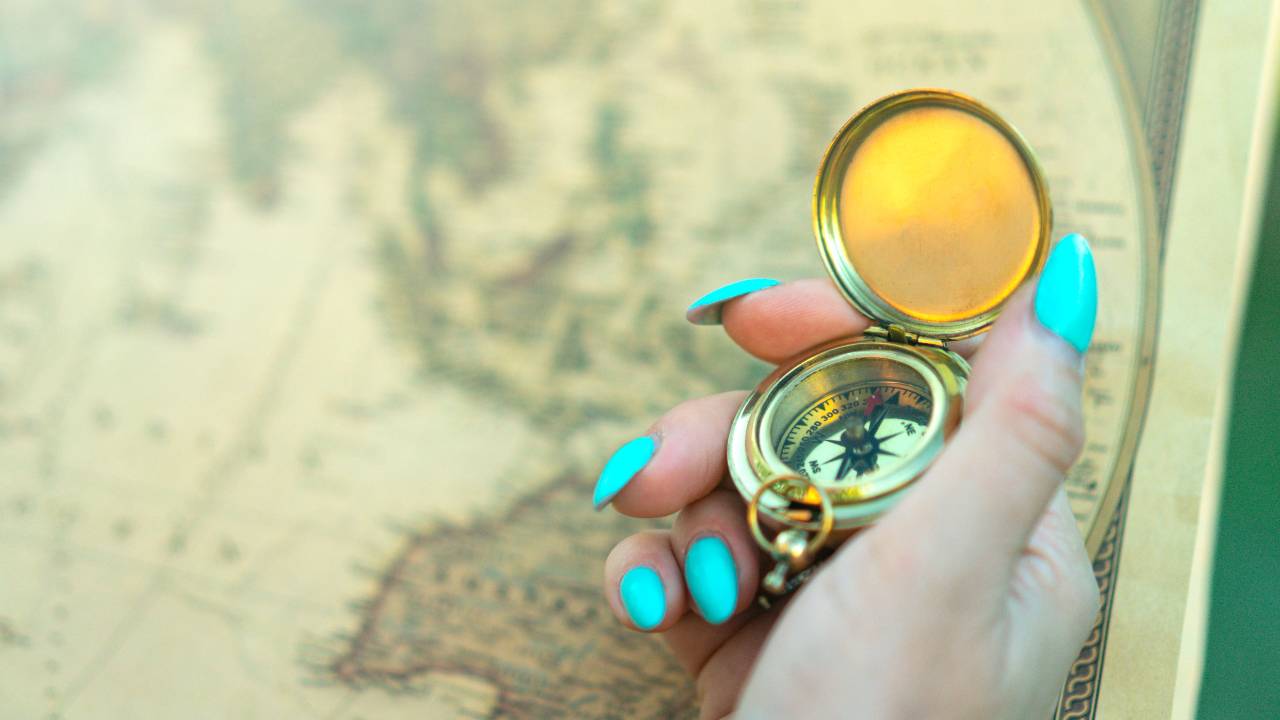
The Boiled Frog
How we drift away from ourselves — and what it takes to find our way back.
There is a well-known metaphor in psychology and leadership circles: if you drop a frog into boiling water, it will jump out immediately. But if you place a frog in cool water and raise the temperature gradually, it will stay — adjusting, acclimating, never quite registering the danger — until it's too late.
Most of us have been that frog at some point in our lives, and many of us are living inside some version of it right now. Not because we're foolish or weak, but because the drift is so gradual, so seamlessly woven into the ordinary texture of our days that we simply don't notice it happening. We don't outsource our values intentionally. We do it slowly, in a world that is extraordinarily good at keeping us distracted, reactive, and just comfortable enough not to question anything.
This is what we're exploring in August — and it begins with an honest question: when did we last stop and examine where our time, our energy, and our money actually go?
✦
The Physics of Drift
There's a law of physics that applies here more directly than most people realize.
The Second Law of Thermodynamics — the law of entropy — states that in any closed system, disorder increases naturally over time. Order doesn't happen by accident — it requires energy, intention, and consistent effort to maintain, and left alone, things naturally fall apart, scatter, and drift toward chaos.
Our houses don't clean themselves. Stars burn out. Structures crumble without maintenance. And lives — without conscious, deliberate attention — drift toward the default settings of whatever environment surrounds them. This is not a moral failing. It is simply the nature of things.
The implication for how we live is profound: if we are not actively and intentionally directing our own lives — our attention, our values, our daily choices — then something else will. The culture will, the algorithm will, the expectations of the people around us will, and the noise of a world that profits from our distraction will fill every space we leave empty.
Sovereignty doesn't happen by accident. It requires energy, and it begins with waking up.
✦
The Water Was Warming and I Didn't Notice
In my early thirties, I lived in Manhattan Beach, California — one of the most beautiful places in the world. Sun, sand, ocean, warm nights, wonderful friends, the particular freedom of being single with no children and a career I loved.
It was a genuinely beautiful season. We traveled internationally, built businesses, went to spiritual retreats and conferences, celebrated every holiday in big joyful groups. Friendsgivings and beach days and adventures. There was so much laughter and lightness and freedom.
And then one day — not dramatically, not with any crisis or catastrophe — I looked up and realized that life had been staying the same, year after year, while something inside me had quietly changed.
I was approaching a new decade, and I noticed that nobody around me was really progressing — not in the ways that had started to matter most to me. Serious relationships. Marriage. Family. Roots. Depth. The people I loved were wonderful, but we were all living in what felt like an eternally youthful bubble — and I realized that bubble was no longer where my values lived.
I no longer had family in Southern California, and I felt, quietly and unmistakably, a calling toward something different. More rooted. More intentional. More aligned with who I was actually becoming rather than who I had been. So I made what felt like an enormous decision and moved to Scottsdale, Arizona.
Five months later, I met my husband Nick.
The water had been warming for years. I finally noticed. And I got out.
✦
Show Me Your Friends
My mother had a saying she returned to often throughout my childhood:
Show me your friends, and I'll show you your future.
Jim Rohn, one of the great philosophers of personal development, put it another way: "You are the average of the five people you spend the most time with." Not metaphorically — literally. Our ambitions, our habits, our standards, our sense of what's normal and possible — all of it is profoundly shaped by the people in closest proximity to us.
When we spend our time with people who wake up early, protect their health, read books, grow spiritually, contribute to their communities, and take their lives seriously — we are more likely to do all of those things. The standard rises around us, and we rise with it. The opposite is equally true, and environments that normalize checking out, numbing, drifting, and staying small have a gravitational pull that is genuinely difficult to resist — not because we're weak, but because we're human, and humans are exquisitely sensitive to the social environments they inhabit.
In the 12-step world, one of the first and most paradoxical pieces of wisdom offered to someone in early recovery is this: change nothing in the first ninety days — and also change everything. Change all the people, places, and things, because those are the things that will pull us back. The environment isn't neutral. It has a direction. And until we build sufficient inner strength and clarity, the environment will almost always win.
This isn't weakness — it's physics again. The environment pulls us down faster than we can pull it up, which means choosing our environments — our friendships, our feeds, our information, our physical spaces — is not a luxury. It is one of the most sovereign acts we can take.
✦
The Unconscious Outsourcing
Here is what the boiled frog phenomenon actually looks like in everyday life:
We say we value health — and then we spend our evenings scrolling instead of sleeping, eating whatever is easiest instead of what nourishes us, canceling the workout because something else always comes up.
We say we value our relationships — and then our most consistent conversations happen in comment sections with strangers rather than at tables with the people we love.
We say we value growth — and then we consume an endless stream of content about growth without ever creating, reflecting, or sitting in the silence that actually produces it.
We say we value peace — and then we voluntarily flood our nervous systems with news cycles, outrage, comparison, and noise from the moment we wake until the moment we collapse.
None of this is intentional. That's exactly the point. We drift, we acclimate, we adjust to the temperature so gradually that we don't notice how hot the water has become — until we're depleted, disconnected, and wondering why life feels so far from what we imagined it would be. This is what it means to outsource our values — not in a single dramatic choice, but in a thousand small unconscious ones, a thousand moments every day where something else decided for us and we let it.
✦
True North
There is a different possibility — and it's the one we're going to spend all of August exploring together.
True north, for me, is alignment so deep it's physical, mental, emotional, and spiritual all at once. It feels like ease. It feels like yes. It feels like clarity and momentum and a peace that isn't passive — it's alive. It's not frantic energy. It's presence. It's the quiet knowing that what we're doing and how we're living is actually ours.
Finding it isn't a one-time event. It's a daily practice — a daily choice, shaped by how we slept, what we ate, whether we moved our bodies, whether we got sunlight and silence and some sense of progress on the things that matter. Some days it comes easily. Some days we struggle back toward it. And on those days, I return to Don Miguel Ruiz's fourth agreement: always do your best — knowing that our best looks different on different days, and that is always enough.
True north is available to all of us. It's not a privilege of the especially disciplined or the spiritually advanced. It's the inheritance of anyone willing to stop drifting long enough to ask: what do we actually want? What do we actually value? And is the life we're living in alignment with those answers?
Those are the questions August is built around.
When did you last genuinely examine where your time, energy, and money actually go? What would you find if you looked honestly?
Think about the five people you spend the most time with — including the voices you consume online. What future are they showing you?
Is there an area of your life where you've been gradually acclimating to something that isn't actually aligned with your values?
What does true north feel like for you — in your body, in your choices, in your days? When did you last feel it?
What is one small, deliberate act of returning to yourself that you could take this week?
True north is available to all of us. It's the inheritance of anyone willing to stop drifting long enough to ask: is the life I'm living actually mine? ✨
WITH LOVE, MEGANThe environment that's shaping you — and how to start shaping it instead.
Free Happiness Habit Starter Kit!
Happiness isn't something you find—it's something you create.
Download your free Happiness Habit Starter Kit and discover simple daily practices to feel calmer, happier, and more in love with your life.
We hate SPAM. We will never sell your information, for any reason.