Know Your True North: What Are You Actually Living For?
Aug 21, 2026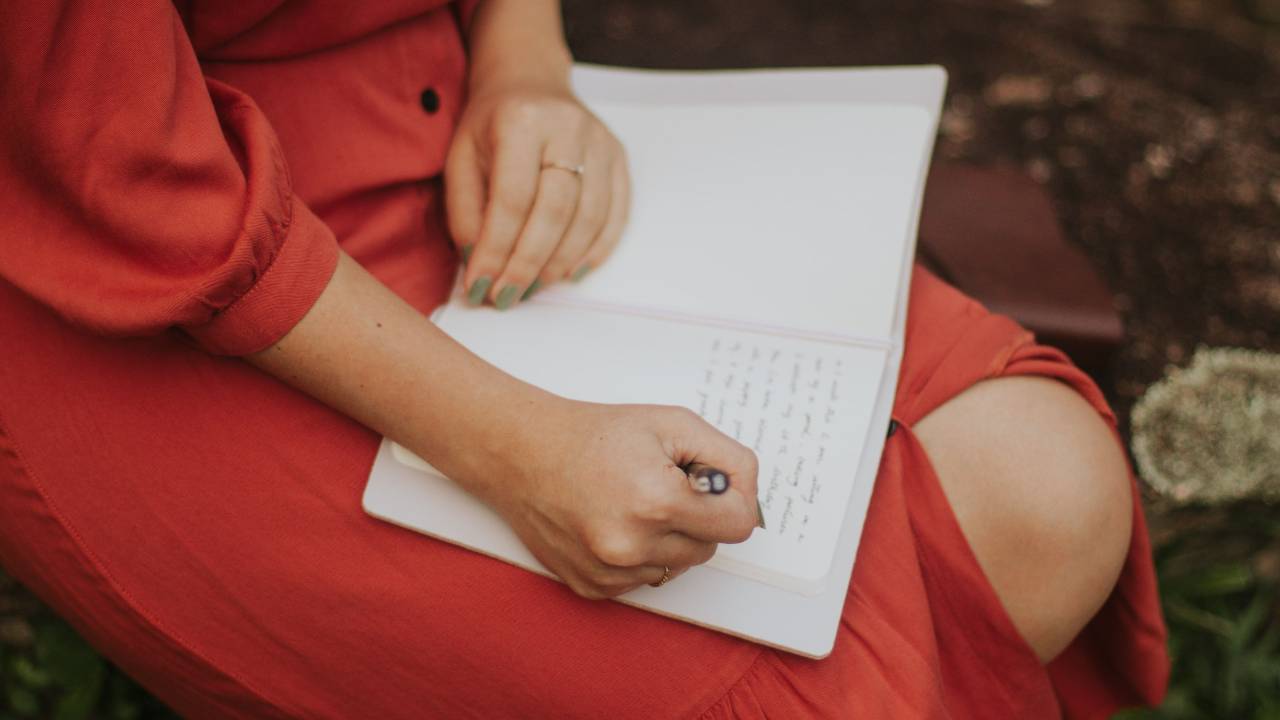
Know Your True North
What are you actually living for — and is the life you're living aligned with the answer?
Here is the question at the center of this whole series — the one I want to plant at the beginning so it can work on you as you read:
What do you truly want?
Not what you're supposed to want. Not what your family expects, or what your culture rewards, or what your algorithm serves you at 11pm when your defenses are down. Not the checklist — the degree, the job, the house, the car, the milestones that mark a life well-lived according to someone else's definition.
What do you truly want — when you drop in, when you give yourself the quiet and the space to ask questions that don't have easy answers, when you let the right brain do the asking instead of the left? Because if you know that — if you can find your true north and keep it somewhere you can return to — then you can put it into the GPS of your life and start making daily choices that actually move you toward it.
✦
Something Is Off — And the Data Confirms It
Arthur Brooks, the Harvard professor and happiness researcher, shared something at the Global Leadership Summit I attended recently that has stayed with me. Starting around 2008, something shifted in the data — depression tripled for people under 35, anxiety doubled, loneliness rose sharply, and when researchers asked people, particularly women, whether their lives felt meaningful, the numbers began to fall in ways that were genuinely alarming.
Brooks' diagnosis is worth sitting with: we have been starving the right brain. The left brain is magnificent at solving problems — it loves logic, systems, efficiency, the satisfaction of checking things off a list, and when you hand it a car problem or a budget or a schedule, it will get to work. But the right brain asks the deeper questions — why am I here, what do I want my life to mean, for what would I give everything — and the right brain needs something the modern world rarely offers: time, silence, pondering, wandering, conversation that goes somewhere real, mystery and curiosity without an agenda.
Brooks illustrated this with something Nick and I thought was hilarious. He talked about his marriage of 45 years — how his wife texted him right before he walked onstage: "You're brilliant — good luck! I love you so much." And then he said, with genuine delight: "I might fly home tonight, walk in the door for dinner, and she is mad at me! Isn't that great?!" And how wonderful that is — because he can't figure it out. It has mystery and meaning and love and authenticity — all the best right-brain things in life. It is a lived experience, not a solved problem.
He then asked the audience: would anyone choose a perfectly programmed mechanical cat over a real one? A cat that always behaves impeccably, never wakes you at night, always wants to be petted exactly when you want to pet it — and never when you don't? Of course not. We want the real cat: messy, unpredictable and full of mystery, because what we actually crave is something authentic, something alive, something that reminds us we are too.
The most meaningful things in our lives are not the ones we can solve. They are the ones we live with, grow through, and are transformed by.
We have built a world extraordinarily good at keeping the left brain busy — and extraordinarily bad at giving the right brain what it needs. And we are paying the price in meaning, in connection, in our collective mental health, and in the quiet sense that something essential is missing even when everything on paper looks fine.
✦
The Checklist Life vs. The Animated Life
There is a version of a life that looks successful by every external measure — the right degree, the prestigious career, the beautiful home — and feels strangely hollow from the inside. Most of us know someone living it. Some of us have lived versions of it ourselves.
Go to a good school, get a degree, get a good job, make money, buy a house, have kids — these are not at all bad things. They are fine things, wonderful things if they're what we truly want. But the question worth asking is: is this our roadmap, or is it someone else's?
Jim Carrey nailed it when he said: "I think everybody should get rich and famous and do everything they ever dreamed of so they can see that it's not the answer."
The animated life is not necessarily more dramatic or more accomplished — it's more alive. A life where our choices connect to something real inside us, where the way we spend our days reflects what we actually care about, and where success isn't a destination we arrive at by checking boxes but something we feel in the quality of an ordinary Tuesday.
✦
Finding My Values — And Why They've Become My Anchor
In my early twenties, I did a values exercise with my colleagues — a simple process of identifying the words that felt most true, most essential, most non-negotiable about how I wanted to live my life. I'm so grateful we did it, because those three words have been an anchor for me for the past two decades.
Love
Living from the heart — looking for the good in people, finding the sweetness in simple things, being in love with life, and filling my world with what I genuinely love: nature, my girls, my husband, the small tender details of a life well-savored.
Service
Being an uplifter wherever I go — not just in the big moments, but in the ordinary ones too: a kind word in the checkout line, helping another mom at the park, saying a prayer for a stranger I can tell is hurting, serving on a committee. Connecting to the understanding that we are all in this together.
Success
Living the life I want to be living — not just a number or a title, but the rhythms of my days, the creative work on my plate, the quality time with my girls, with Nick, and the friends I cherish. A life by my own design — a life of intentional creation.
When all three of those values are present and in alignment, I know I am living from my true north, and I'm flying high on the emotional scale. And when something feels off — when I'm depleted or frustrated or vaguely disconnected — it's almost always because one of those three values has been neglected or compromised.
At different times in my life when I've felt lost, unfulfilled, or unhappy, I've learned to use that feeling as a barometer — a signal that it's time to return to those three words. I'll go somewhere in nature or to a favorite coffee shop, write them at the top of a page, and look honestly at how I'm spending my time, what's on my plate, and what my mental, emotional, and spiritual energy is going toward. I don't rush this because it is a process that can't be rushed. I give myself a good block of uninterrupted time — which is exactly what the right brain needs to do its most honest work. Almost every time, that inventory re-anchors me and gets me back on track.
Values are not aspirations — they are diagnostic tools and our compass, telling us where we are and where we've drifted.
✦
The Victimhood Detour
Before we go further, there's a detour worth naming — and it's a critical one that many of us take without realizing it.
When life doesn't look the way we imagined, when circumstances feel unfair, when we've been hurt or let down or handed a plot twist we didn't ask for, it's tempting and entirely understandable to take up residence in the story of what happened to us and let the wound fester and become the identity.
Caroline Myss, whose work on personal power has shaped so much of how I think, points out that we all carry a victim archetype — a part of us that is always available to explain our circumstances through the lens of what's been done to us, what we've lost, what we lack, what isn't fair. And one of our most important jobs as conscious human beings is to stay vigilant about when and how that archetype is running the show. Not because our pain isn't real — it is — but because when we let the victim story take over, we give away the very power we need to move forward and evolve. The most fulfilled people I know are the ones who have learned to weed out their own victim mentality with honesty and compassion, choosing again and again to be the author of their story rather than its casualty.
Edith Eger, the Holocaust survivor and psychologist who wrote The Choice, understands this as well as anyone alive. She survived Auschwitz, lost her parents in the camps, and went on to become one of the world's most profound teachers on human freedom and resilience. Her central teaching is this: we cannot choose what happens to us, but we can choose what we do with it. The prison, she says, is never the place or the circumstance — it is always in the mind.
Something happened to us. It is not us, and it does not get to be the last word on who we are.
The brave choice here is not denial and it is not pretending the wound wasn't real — it is the decision, sometimes made again and again as many times as it takes, to let what happened be part of our story without letting it be the whole story, to be the one who survived it, grew through it, and found something meaningful on the other side that wouldn't have been possible any other way. That decision is one of the most powerful acts of sovereignty we can make — and one of the truest expressions of living from our north star.
✦
Embracing the Season We're In
One of the things I most want to offer in this series is permission. Permission to be exactly where we are in our life.
We live in a culture that is relentlessly future-oriented — always asking what's next, what we should be doing, what we're missing, who has what we don't. Comparison is built into the architecture of the modern world, and it robs us, quietly and constantly, of the joy that is right here, right now.
But everything in life is impermanent, and every season ends — the hard ones pass, and so do the beautiful ones, which is why we cannot afford to sleepwalk through either.
The question I return to again and again, especially in the difficult seasons: what is the gift of this time? Not what's wrong with it, not what I wish were different — what is being offered here, what can only be learned here, what will I look back on and realize I needed even if I couldn't see why while I was in it?
That question doesn't bypass the hard things or pretend the difficult isn't difficult, but it opens a door that comparison, discontentment, and resentment keep firmly shut — the door to presence, to appreciation, to the particular beauty of this season, right now, exactly as it is. This too shall pass, which means we might as well be fully here for it.
✦
The Magic Is in the Details
Sovereignty doesn't announce itself in a single dramatic moment of transformation — it shows up in the texture of ordinary life, in the small mostly invisible choices that accumulate, day after day, into something that either looks like our life or doesn't.
The magic is in the details — the music we let into our mornings, the books we choose to spend our evenings with, whether we're actually present in a conversation with a friend or colleague or halfway somewhere else, the rituals that bookend our days, the way we choose to hold our phone during dinner or put it away, what we listen to in the car, whether we take the walk or skip it, who we call when something important happens, and whether we take some time during the day to fully feel our breath in our body and think about how sweet life is.
These details are not small — they are the substance of a life, the place where our values either show up or they don't, where true north is either honored or quietly abandoned a hundred times before lunch. Caroline Myss teaches that where our attention goes, our energy flows, which means the details of our attention are not incidental to our lives. They are our lives.
✦
What We Truly Want
Here is what I believe with my whole heart, and what this entire series has been building toward:
We are all conscious co-creators of this mysterious, wonderful, beautiful, challenging, hard, sometimes devastating, sometimes blissful human experience. We did not choose every circumstance. But we have more choice than we usually claim — in how we respond, in what we cultivate, in what we build from whatever we've been given.
We are not passengers and we are not simply products of our environments or our upbringings or our circumstances — we are the ones who get to decide, with growing skill and growing sovereignty, what kind of life we want to animate from the inside out.
And as women especially, I think it matters deeply that we give ourselves the space, the support, the community, and the right-brain time to actually ask: what do I want? Not what I should want, not what would look good, not what would make everyone else comfortable — what do we genuinely, truly, in the quiet of our own hearts, want?
Because when we know that — when we have that true north — we can put it in the GPS and start navigating with intention instead of drifting with the current. We can honor who we were, bless it, be grateful for it, and keep becoming who we're meant to be. We can iterate and edit and upgrade throughout our lifetime without self-rejection — moving toward the life that is ours to create and enjoy, one intentional choice at a time.
What do you truly want — not what you're supposed to want, but what you actually, genuinely want your life to feel like?
What are your core values — the two or three words that, when truly present in your life, make you feel most alive and most like yourself?
Is there a checklist you've been following that belongs to someone else? What would your own roadmap look like?
Are you living from your values and your vision — or in reaction to what happened to you? What would it look like to choose the former?
What is the gift of the season you're in right now — even if it's a hard one?
Look at the details of your life this week — your music, your conversations, your rituals, your attention. Do they reflect what you say you value?
It's worth saying again: we are all conscious co-creators of this mysterious, beautiful, challenging human experience. When we know our true north, we can stop drifting and start building — one intentional choice at a time. ✨
WITH LOVE, MEGANDon't Let Them — the series finale and the daily practice of fiercely protecting everything we've built this month.
Join the Friday List
Every week I send something worth sitting with — a new blog post, a reflection prompt, or a soul astrology insight to help you navigate the week ahead.
We hate SPAM. We will never sell your information, for any reason.